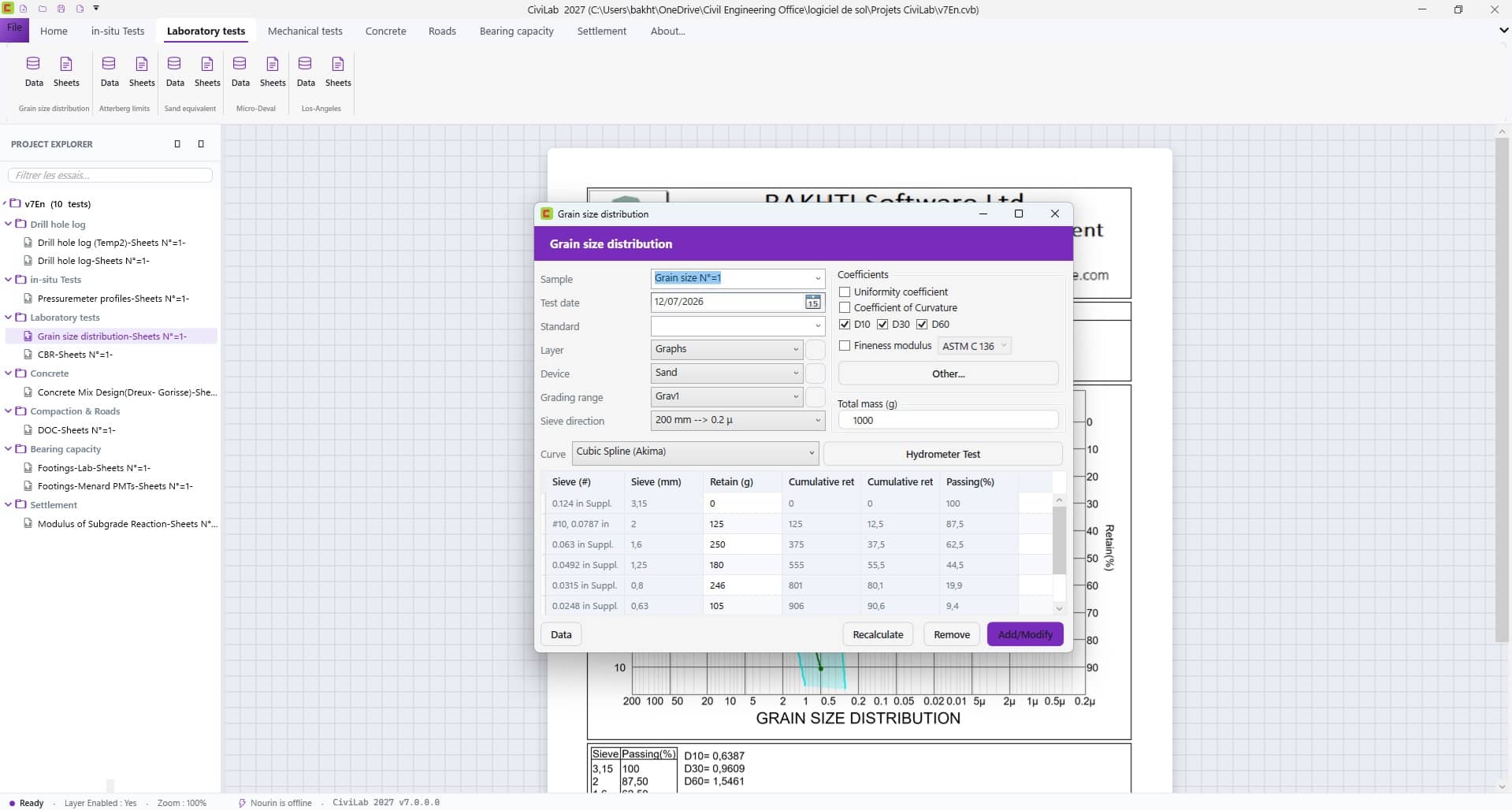
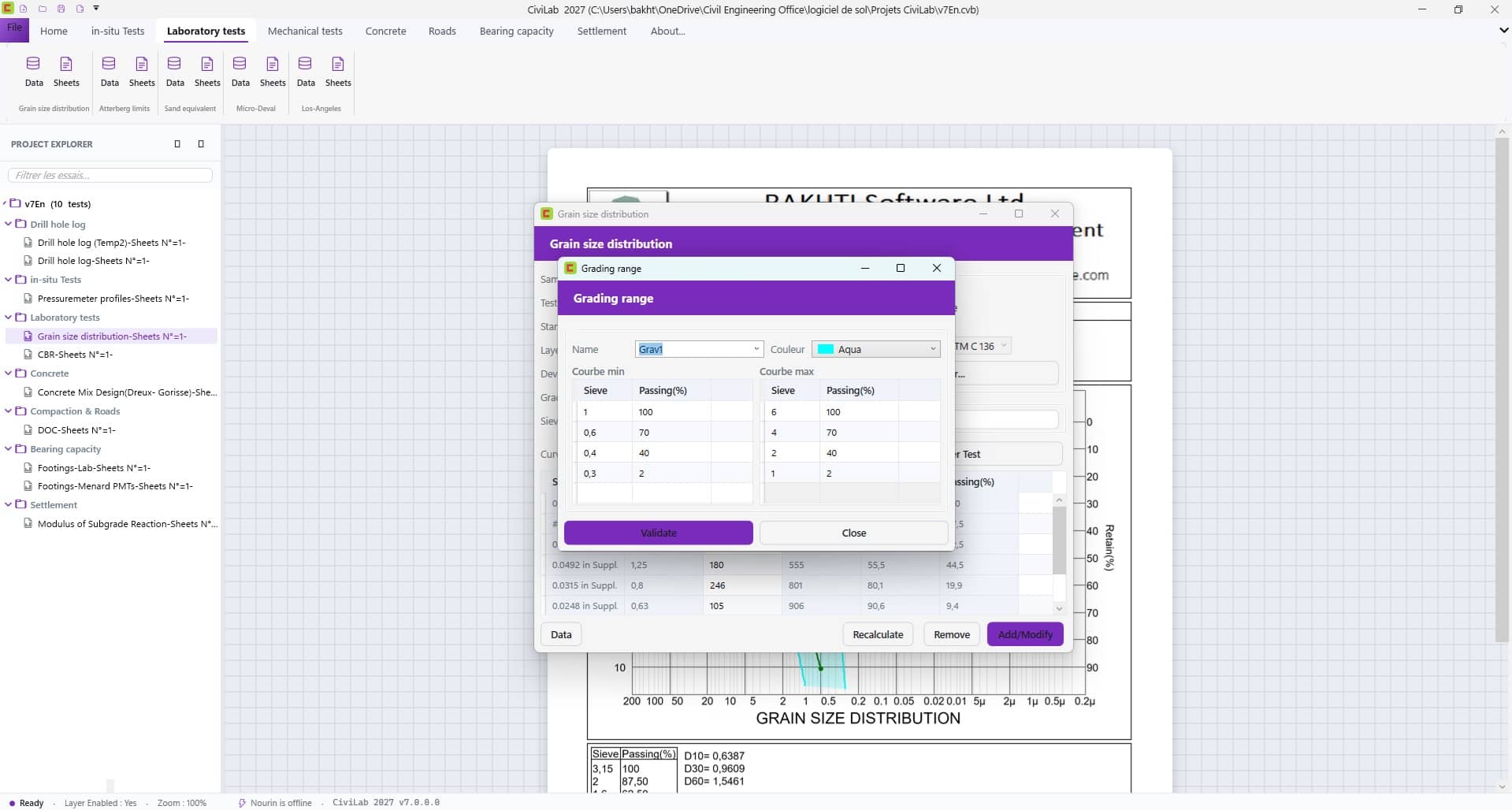
With our soil software "CiviLab", you can easily perform the calculations for this test, plot the grading curve using several approaches, enter grading envelopes and choose the sieve order. CiviLab also produces high-quality reports and archives them properly
For sieve analysis, CiviLab provides all the sieves available in:
- ASTM E11;
- ISO 565/3310-1.
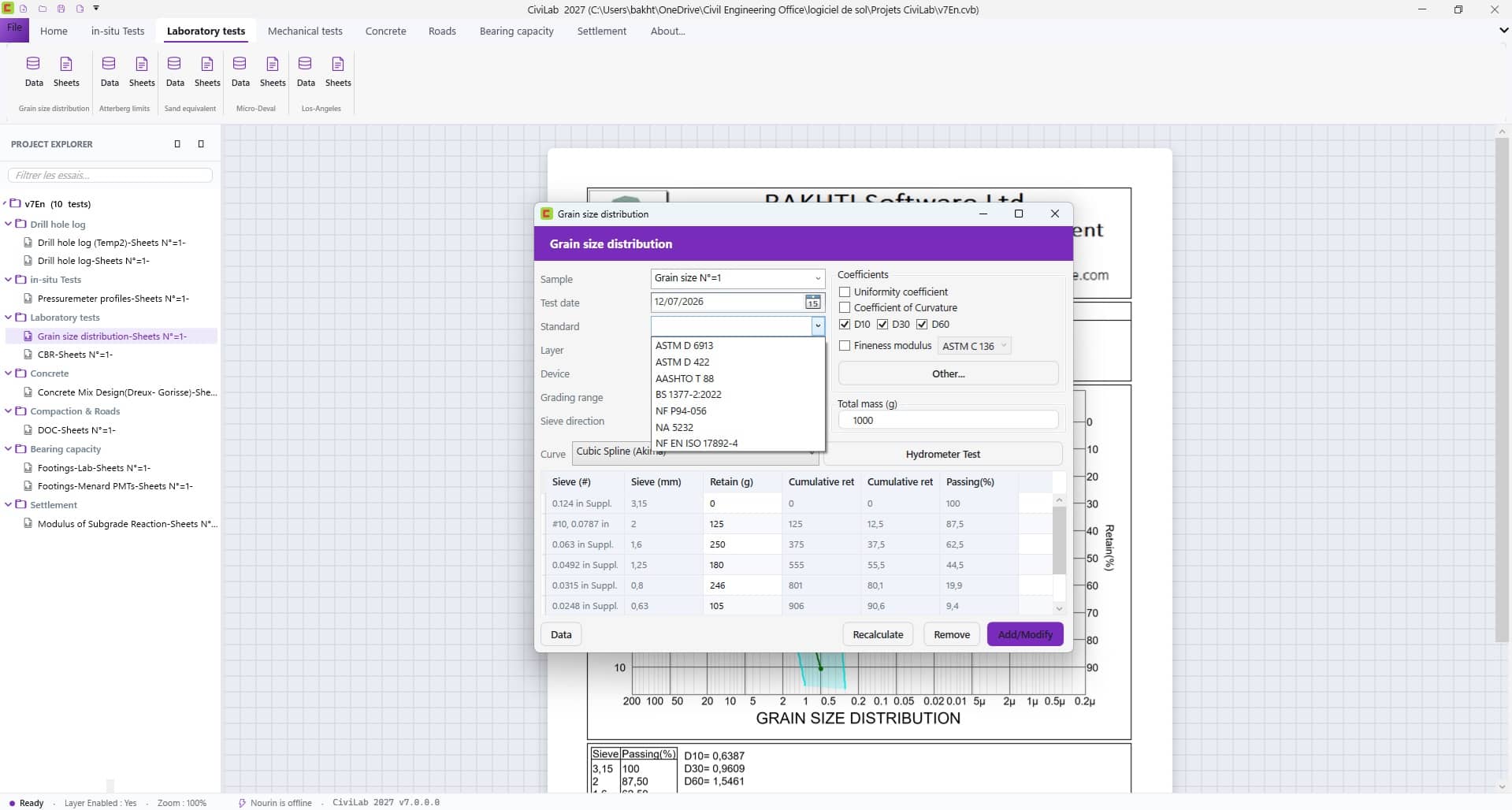
For sieve analysis, CiviLab applies the following standards:
- ASTM D 7928;
- ASTM D 422;
- AASHTO T 88;
- BS 1377-2:2022;
- NF P94-056;
- NA 5232;
- NF EN ISO 17892-4;
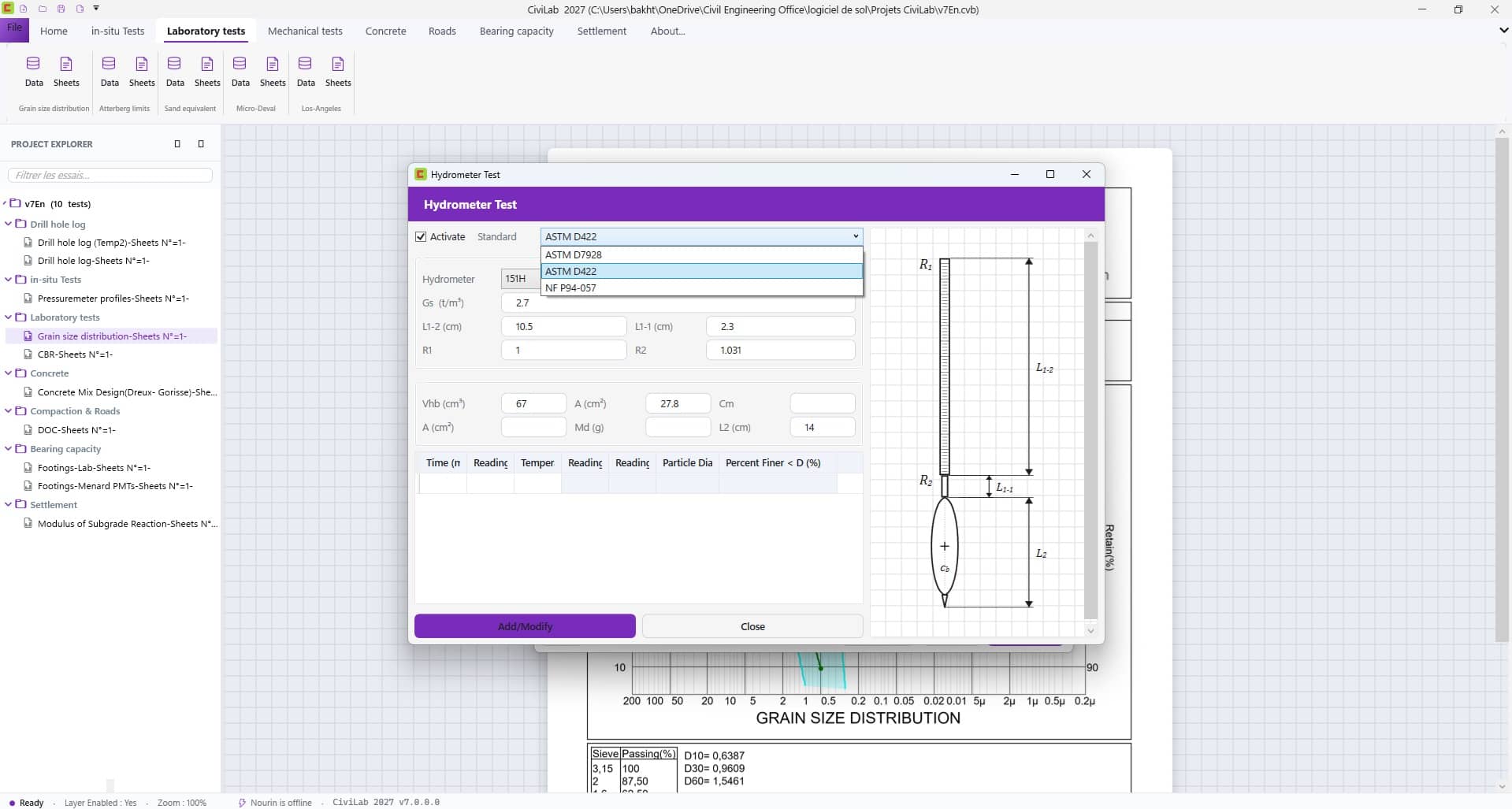
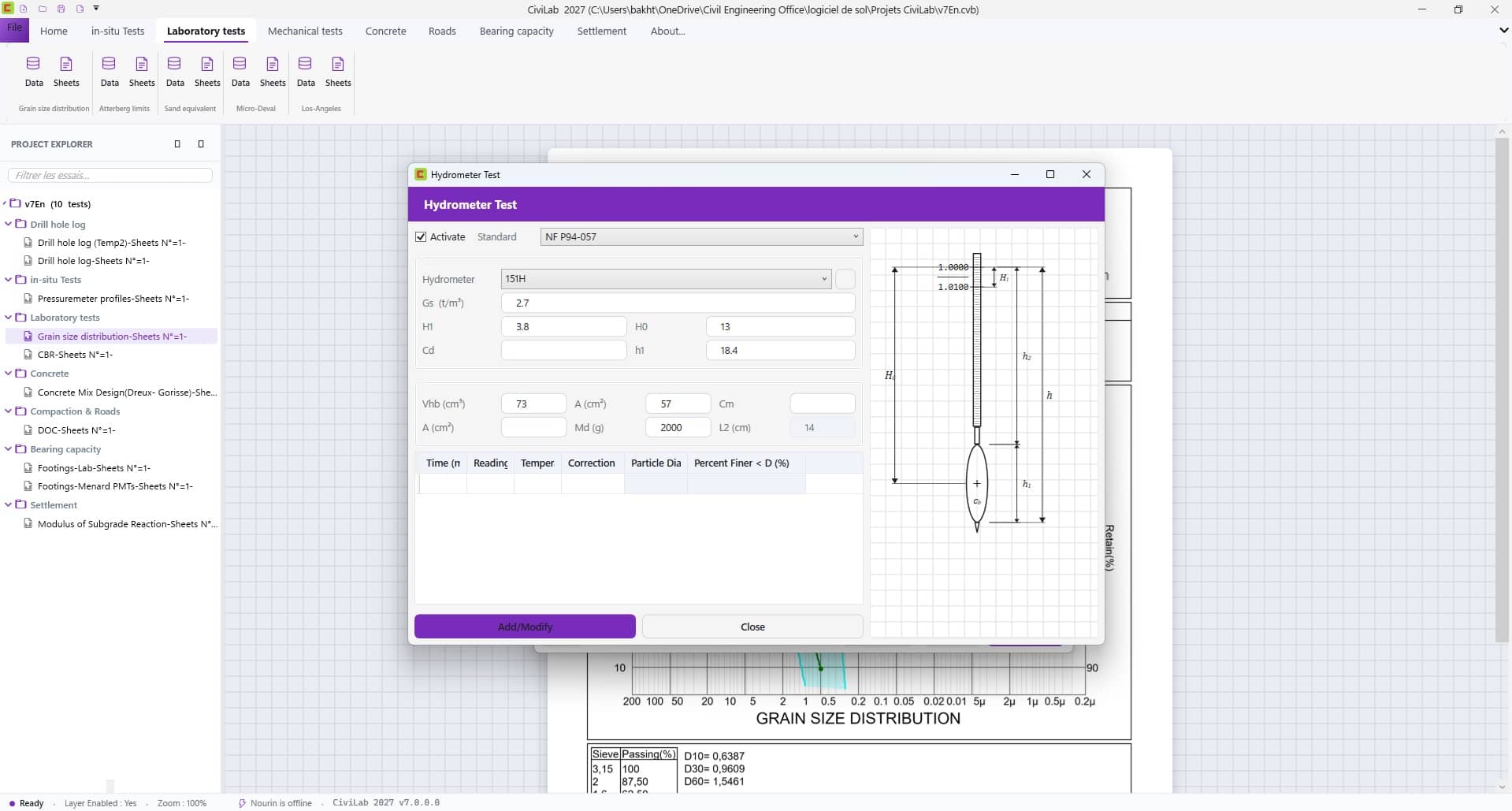
For hydrometer analysis, CiviLab applies the following standards:
- ASTM D 7928;
- ASTM D 422;
- NF P 94-057;
CiviLab allows you to:
-
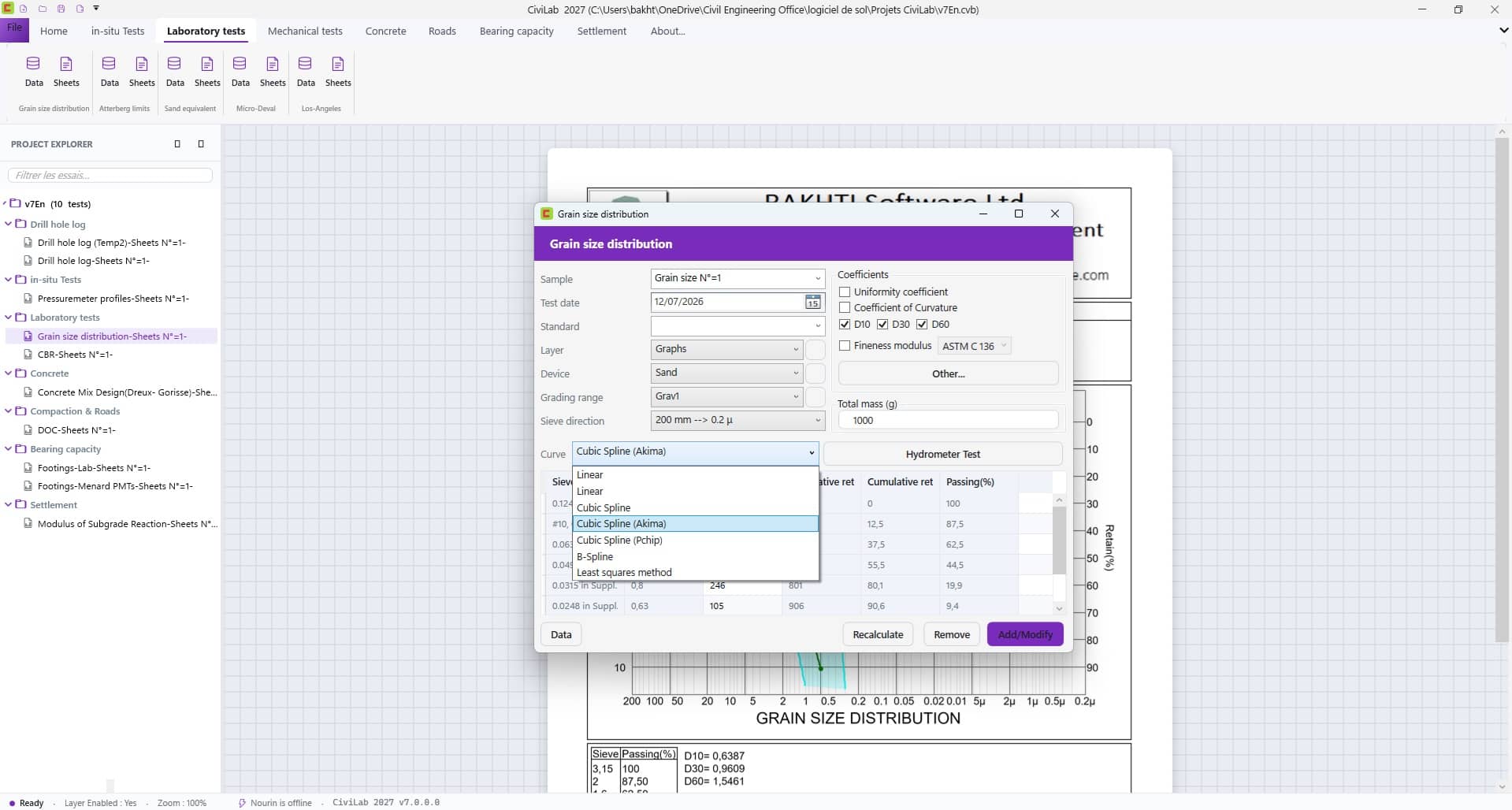
Plot the grading curve using several methods (you can plot several curves on the same sheet):
- Linear;
- Cubic spline;
- Akima cubic spline;
- Pchip cubic spline;
- B-spline.
-
Calculate the fineness modulus according to the standards:
- NF EN 12620;
- ASTM C 136;
- XP P 18-540;
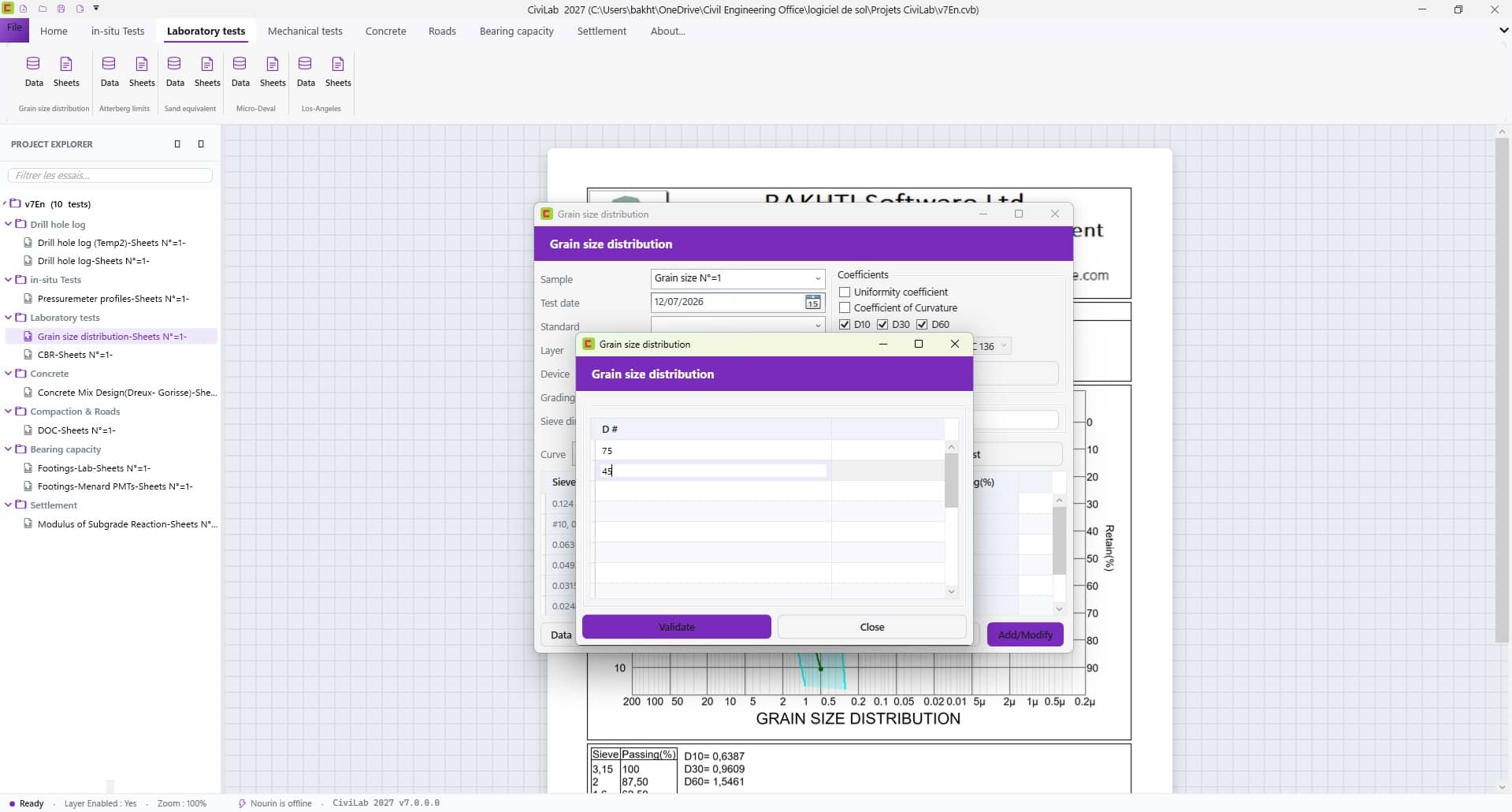
- Calculate the coefficient of uniformity (Cu) and the coefficient of curvature (Cc);
- Calculate the effective diameters D10, D30, D60 and any value of Dx (Dx: the abscissa value read for the point on the grading curve corresponding to the ordinate x%);